Loading articles...
Related articles
The Hormuz crisis validated Gulf Coast storage as strategically indispensable — but steep backwardation, not contango, is driving demand. This Q1 2026 briefing covers the storage economics paradox, Sunoco and MOL terminal acquisitions, new construction from Brownsville to Jones Creek, the MTVLO NESHAP and Subpart Kc regulatory wave, blue ammonia and SAF milestones, drone inspection adoption, insurance rate relief, hurricane outlook, and what CERAWeek and AFPM speakers said about the road ahead.
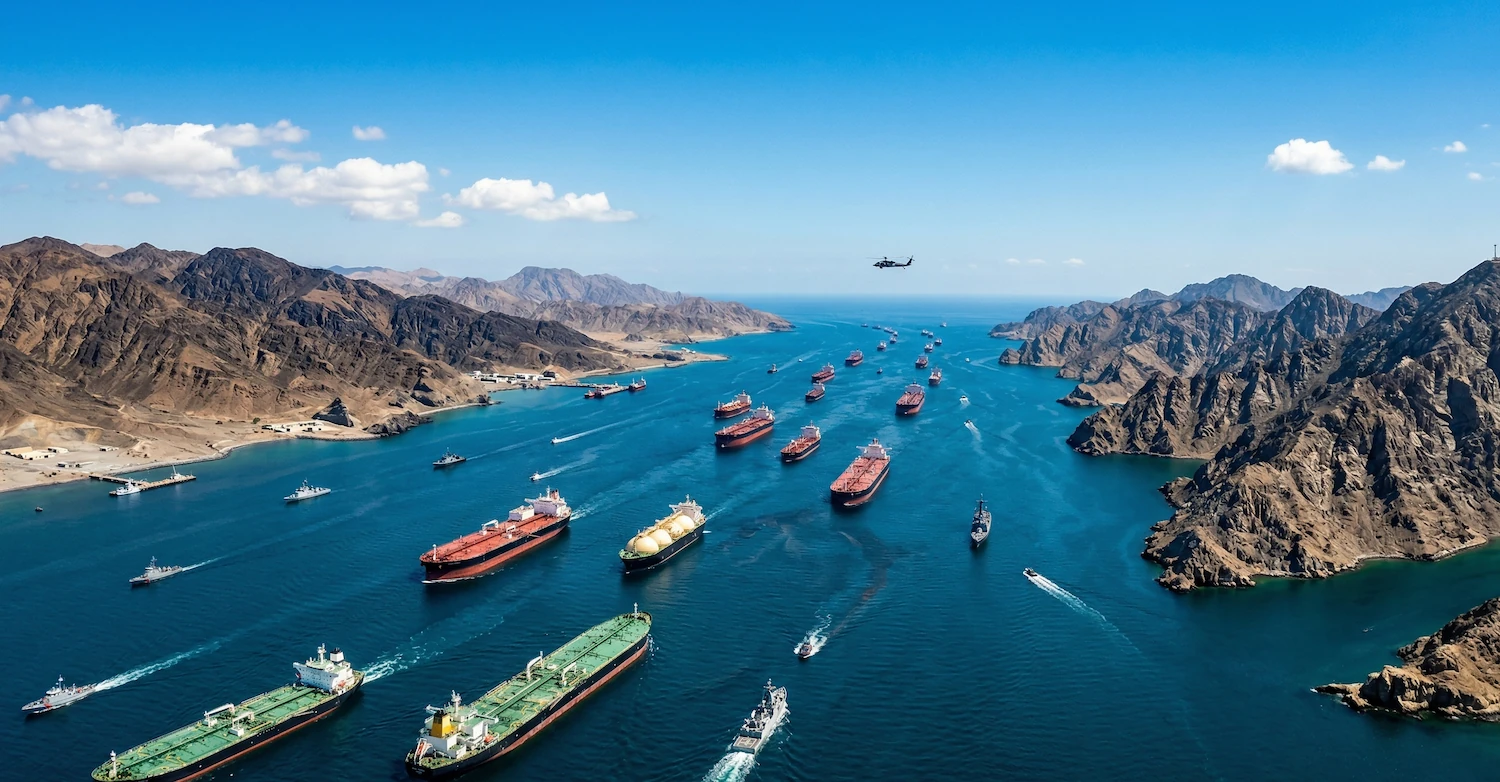
The Strait of Hormuz crisis has fundamentally reordered Gulf Coast tank storage economics in a matter of weeks. Since coordinated U.S.-Israel airstrikes struck Iran on February 28 and the IRGC sealed the Strait on March 2, the IEA has declared it the largest supply disruption in the history of the global oil market — shutting in at least 8 million barrels per day of crude and 2 million barrels per day of condensates and NGLs. For Houston Ship Channel terminal operators, the fallout has been paradoxical: storage assets are running near capacity, but steep backwardation — not contango — is driving demand. Meanwhile, a wave of M&A, new construction, tightening regulation, and rapid digitalization is reshaping the competitive landscape heading into a hurricane season that forecasters expect to be near-normal.
Conventional wisdom says supply disruptions create contango — forward prices rising above spot — making it profitable to store barrels for later sale. The Hormuz crisis has done the opposite. Brent front-month crude surged to roughly $106 per barrel by late March while December 2026 contracts traded near $79.70, creating approximately $26 per barrel of backwardation. Physical Dubai-linked crude spiked to an astonishing $138–$140 per barrel, a $37–$40 premium over futures prices unprecedented in modern markets.
This structure kills the classic cash-and-carry storage play. Selling today beats storing for tomorrow. Yet Gulf Coast terminal demand has surged anyway, driven by operational necessity rather than speculation. Refiners are running flat-out — Gulf Coast refinery utilization hit 96.7% for the week of March 20 — and the 3-2-1 crack spread exploded from under $20 per barrel at the start of 2026 to over $54 per barrel by late March, the strongest refining margins since 2022. U.S. crude inventories have built for four consecutive weeks, adding a combined 38 million-plus barrels through late March.
Meanwhile, 247 tankers are stranded in the Middle East Gulf, representing roughly 6% of global tanker deadweight capacity. VLCC freight rates hit an all-time high of $423,736 per day on the benchmark MEG-China route. The IEA coordinated releases of over 300 million barrels from strategic reserves across 32 countries, the largest coordinated drawdown in history.
For terminal operators, the message is clear: storage demand is robust but driven by throughput maximization and strategic stockpiling, not speculative carry. Terminals with refinery-adjacent positions, crude export connectivity, or government SPR contracts are capturing the most value.
Consolidation continues to reshape the Gulf Coast terminal landscape. Sunoco LP has emerged as perhaps the most aggressive acquirer in the sector. After closing its $9.1 billion Parkland Corporation acquisition in October 2025 and integrating the $7.3 billion NuStar merger, Sunoco completed the purchase of TanQuid — Germany's largest independent terminal operator — in January 2026. The company now operates over 14,000 miles of pipeline and 160-plus terminals across 32 countries, with management guiding to at least $500 million annually in additional bolt-on acquisitions.
BWC Terminals held a groundbreaking for a new terminal in Pascagoula, Mississippi, on the former Mississippi Phosphates Corporation site, with seven above-ground storage tanks expected operational by fall 2026. BWC now operates 22 sites concentrated along the Gulf and East Coasts, with concurrent construction at Jacintoport in Houston.
The MOL (Mitsui O.S.K. Lines) acquisition of LBC Tank Terminals for $1.715 billion, which closed in mid-2025, is now producing operational results. LBC Houston, with 8.1 million barrels of capacity across 189 tanks on the Houston Ship Channel, is actively expanding with additional storage capacity and new barge docks under Japanese ownership — a significant shift in the operator landscape.
Tailwater Capital closed a majority investment in Central Midstream Partners in December 2025, adding Gulf Coast liquids transportation and approximately 350,000 barrels of terminal storage to its portfolio.
The most headline-grabbing announcement came on March 10 when America First Refining unveiled plans for what would be the first new greenfield U.S. Gulf Coast oil refinery in roughly 50 years, to be built on 240-plus acres at the Port of Brownsville. The project claims a 20-year binding offtake covering 1.2 billion barrels of U.S. shale oil. Groundbreaking is scheduled for Q2 2026 with production targeted for 2028–2029. Significant caveats apply: environmental permits remain unsecured and the $300 billion figure represents total 20-year deal value rather than construction cost.
Closer to Houston, Enbridge's Houston Oil Terminal (EHOT) at Jones Creek is approaching its 2026 in-service date. The facility features four above-ground crude oil storage tanks with 2.7 million barrels of shell capacity, a 24/7 control room, and connectivity to the Seaway Pipeline system for both Canadian heavy and domestic sweet crude, with export capability of 930,000 barrels per day and ultimate expansion potential to 15 million barrels.
Texas GulfLink received its MARAD license on January 29, 2026 for a deepwater crude oil export terminal approximately 30.5 miles offshore — a VLCC-capable facility that would further expand Gulf Coast export infrastructure.
Port Houston's commission approved construction of Wharf 1 at Bayport Container Terminal in February — 1,300 linear feet of new wharf space designed to accommodate the largest vessels calling Houston, with completion targeted for 2028.
Valero and Darling Ingredients' Diamond Green Diesel facility in Port Arthur completed its first marine shipment of neat sustainable aviation fuel to Europe in March 2026 — a logistics milestone for Gulf Coast SAF export infrastructure. The $315 million SAF upgrade gives the plant optionality to convert up to half of its 470 million gallon-per-year renewable diesel capacity to neat SAF.
Woodside formally took delivery of the Beaumont New Ammonia plant in March 2026 after OCI Global completed performance testing. The 1.1 million tonne-per-year facility has begun commercial ammonia deliveries. However, the carbon capture component that would make it blue ammonia has been delayed beyond 2026 due to construction issues at ExxonMobil's third-party CCS facility.
At Ingleside near Corpus Christi, Yara and Enbridge's Project YaREN — a $2.6–$2.9 billion blue ammonia facility targeting 2.8 million metric tons annually — hit a permitting wall when the Ingleside City Council unanimously denied its special use permit. Jefferson Energy's blue ammonia export terminal at Port of Beaumont continues dock construction, backed by $382 million in facility revenue bonds.
Occidental's 1PointFive Bluebonnet Sequestration Hub — with capacity for 1.2 billion metric tons of CO2 storage — is tentatively set for service in 2026. Enterprise Products is developing a fee-based CO2 pipeline network connecting Houston Ship Channel industrial emitters to the hub. The HyVelocity hydrogen hub, backed by up to $1.2 billion in federal funding, is planning salt cavern hydrogen storage and large-scale pipeline infrastructure along the Gulf Coast.
Three significant federal regulations are actively hitting Gulf Coast terminals in 2026. The most immediately impactful is the EPA's proposed amendments to the Marine Tank Vessel Loading Operations NESHAP, published in the Federal Register on March 4, 2026, with comments due April 20. The rule would impose enhanced flare monitoring, periodic performance testing, electronic reporting, and critically, removal of startup, shutdown, and malfunction exemptions that many terminal operators have relied upon.
Simultaneously, EPA's NSPS Subpart Kc for volatile organic liquid storage vessels, finalized in October 2024, is now in active compliance implementation. The new standard dramatically lowers vapor pressure thresholds, raises control device efficiency from 95% to 98%, and introduces a novel provision: simply changing a stored liquid to one with higher vapor pressure now constitutes a modification triggering full compliance.
The U.S. Coast Guard's MTSA cybersecurity rule reached its first major compliance milestone on January 12, 2026, when all personnel at regulated marine facilities were required to have completed cybersecurity training. By July 2027, terminals must designate a Cybersecurity Officer, complete a formal cybersecurity assessment, and submit a cybersecurity plan for Coast Guard approval.
On the pipeline safety front, PHMSA updated API RP 2026 to the 4th edition effective January 1, 2026, governing safe access to floating roof tanks. Texas TCEQ is launching workshops in 2026 for its Aboveground Storage Vessel Safety program, which will require registration of all tanks 21,000 gallons and above at bulk storage terminals by September 2027.
The March 2026 issue of Hydrocarbon Engineering's Tanks & Terminals supplement reads like a technology catalogue for the terminal of the future. Features covered cloud-hosted SaaS platforms reshaping terminal operations — from order management through automated invoicing — while ABB made the case that security and connectivity must be designed together as terminals digitalize.
The Port of Corpus Christi's OPTICS digital twin platform, merging Unity 3D with Esri geospatial software, demonstrated tangible results: during a recent oil spill emergency, the system simulated cleanup routes in minutes, cutting response time by 40% and boosting dock availability by 22%.
Drone-based tank inspection is moving rapidly from pilot programs to standard operations. Shell deployed automated Beyond Visual Line of Sight drone inspections, replacing hours of manual climbing on 25-meter tanks with 20-minute automated missions using AI-analyzed high-resolution and thermal imagery. Oceaneering partnered with Flyability to demonstrate ultrasonic thickness measurements via drone payload inside atmospheric tanks.
Honeywell's three-way corporate split, on track for completion in late 2026, created a dedicated Process Automation and Technology segment that directly serves terminal automation markets, entering 2026 with a record $37 billion backlog.
In a welcome development, property catastrophe reinsurance rates fell sharply at the January 1, 2026 renewals — down 12% globally and 12% for U.S. property catastrophe, with Howden Re reporting declines of nearly 15%. This represents the steepest single-year drop since 2014, driven by low catastrophe losses in 2025 and robust reinsurer balance sheets.
The 2026 Atlantic hurricane season outlook is cautiously favorable. AccuWeather's March 25 forecast calls for 11–16 named storms with 4–7 hurricanes. The key moderating factor is a developing El Niño, with NOAA assigning 62% probability of onset by June–August 2026. El Niño historically suppresses Atlantic hurricane activity through increased wind shear. However, above-average Gulf of Mexico sea surface temperatures remain a wildcard for rapid intensification near the coast.
The fundamental vulnerability of Houston Ship Channel infrastructure remains unchanged. The Galveston Bay Barrier System — the massive storm surge gate designed to protect the channel, 6 million residents, and $800 billion in assets — is in active design but construction has not begun. A moderate Category 3 storm could generate 20–25 feet of surge along the channel.
CERAWeek 2026, held March 23–27 in Houston under the theme "Convergence and Competition," struck a consistent note: infrastructure is the binding constraint. The American Gas Association's Richard Meyer synthesized the conference: the center of gravity is shifting toward execution and resilience, and the question is no longer what the energy system should look like but whether we can build it fast enough.
At the AFPM annual meeting in New Orleans (March 15–17), Energy Aspects' Dr. Amrita Sen placed the Hormuz disruption in stark context, calling it the mirror image of COVID-19 — a supply shock rather than a demand crash — and warned that the old status quo is not returning. She noted U.S. Gulf Coast refiners hold the strongest global competitive position due to feedstock flexibility, operational complexity, and export infrastructure.
Terminal operator earnings reinforce the bullish outlook. Vopak reported record FY2025 results with EUR 1,184 million in proportional EBITDA and 91% occupancy, guiding to EUR 1,150–1,200 million for 2026 with EUR 4 billion in growth capex planned through 2030. Sunoco LP guided to $3.1–$3.3 billion in 2026 EBITDA — roughly triple its legacy levels. The global tank storage terminal market, valued at approximately $36–$38 billion in 2026, is projected to reach $50 billion by 2034.
The first quarter of 2026 will be remembered as the moment geopolitics stress-tested Gulf Coast terminal infrastructure and found it indispensable. The Hormuz crisis has validated the strategic importance of U.S. Gulf Coast storage and export capacity — driving record refinery runs, massive inventory builds, and all-time high freight rates even as steep backwardation defies the expected contango storage play.
Three dynamics deserve close attention through the rest of 2026. First, the M&A wave is concentrating terminal ownership into fewer, larger, better-capitalized hands. Second, the regulatory burden is accelerating — the MTVLO NESHAP, Subpart Kc, and MTSA cybersecurity rule collectively represent the most significant compliance wave to hit marine terminals in years. Third, the energy transition infrastructure — SAF exports, blue ammonia plants, CO2 sequestration hubs — is physically materializing on the Gulf Coast, even as timelines slip and demand signals remain mixed.
Ameritank's 147-acre La Porte facility offers existing terminal infrastructure with direct Houston Ship Channel frontage, a deepwater barge dock, 840 MW of power capacity, Union Pacific rail, and 4 billion gallons of annual water access — assets purpose-built for the commodity storage and throughput demands reshaping the Gulf Coast corridor. Connect with the Ameritank team.

Andrew Viera
Business Development Executive, Ameritank
Andrew manages offtaker relationships, capital partnerships, and strategic positioning for Ameritank's 147-acre terminal on the Houston Ship Channel. He works across terminal development, investor relations, and market analysis to connect infrastructure capacity with commodity demand across the Gulf Coast energy corridor.